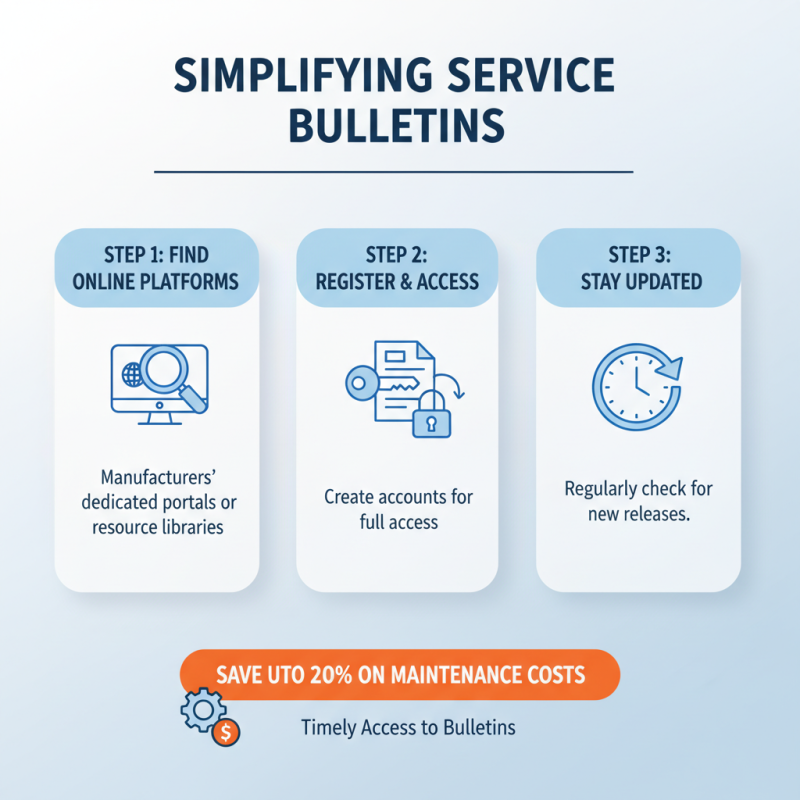
How to Access and Understand Service Bulletins Effectively?
Service bulletins play a critical role in the aviation industry. According to the Federal Aviation Administration (FAA), timely access to service bulletins is essential for maintaining aircraft safety and performance. A recent industry report highlighted that over 70% of aircraft incidents could be traced back to a lack of adherence to these documents.
Understanding how to access and interpret service bulletins is crucial. Many engineers and technicians struggle to find relevant bulletins. Industry surveys indicate that 65% of maintenance personnel feel overwhelmed by the volume of information available. Clear guidelines on locating and utilizing these documents can significantly improve compliance and safety.
Despite their importance, not every bulletin is user-friendly. Some are poorly formatted or lack vital details. It’s essential for professionals to practice critical thinking as they sift through this information. Continual engagement with these documents may lead to better operational outcomes, but it can also expose gaps in knowledge. Addressing these gaps is necessary for effective maintenance practices.

Understanding the Purpose and Importance of Service Bulletins
Service bulletins play a vital role in understanding equipment updates and maintenance needs. They offer insights into potential issues. Knowing their purpose helps users anticipate maintenance requirements and enhance equipment longevity.
Tips: Always review service bulletins promptly. Set aside time each month to check for updates. This ensures you stay informed. Look for key changes or warnings that may affect your operations.
Understanding service bulletins means grasping their importance. They provide solutions to common problems. A missed bulletin can lead to bigger issues down the line. It’s easy to overlook details. Regularly discussing bulletins in team meetings can foster better comprehension.
Tips: Create a bulletin library. Organizing bulleted lists can simplify access. Encourage team members to contribute to discussions. Their insights can reveal overlooked aspects. Remember, staying proactive can save time and resources.
Types of Service Bulletins: A Comprehensive Overview
Service bulletins serve as vital resources for understanding product maintenance and operational updates. They come in various types, each with distinct purposes. Maintenance bulletins often provide guidelines on routine checks and procedures. Technical bulletins focus more on specific issues, detailing symptoms and solutions. These documents can be dense and filled with jargon, making them challenging to interpret.
Users should pay close attention to emergency bulletins. These highlight urgent safety concerns that could impact operations. Additionally, advisory bulletins offer recommendations for optimal product use. Understanding these types ensures informed decisions. However, many struggle to differentiate between them. Misinterpreting crucial information can lead to significant errors.
To navigate service bulletins effectively, one must actively engage with the content. Take notes as you read. This practice aids comprehension and retention. Don’t hesitate to reach out for clarification if unsure about parts. Learning to access these documents is essential. They can guide you toward better practices. It might seem tedious, but investing time in understanding them can lead to improved functionality and safety.
How to Access and Understand Service Bulletins Effectively? - Types of Service Bulletins: A Comprehensive Overview
| Bulletin Type |
Description |
Purpose |
Frequency of Updates |
| Safety Bulletins |
Information regarding safety issues and necessary corrective actions. |
To ensure user safety and compliance with regulations. |
As needed, often triggered by incidents or emerging risks. |
| Technical Bulletins |
Detailed technical information and updates on repairs or services. |
To provide technicians with the required data for efficient maintenance. |
Regularly, based on product updates or new findings. |
| Operational Bulletins |
Guidelines related to optimal operation and usage practices. |
To enhance user experience and product longevity. |
Occasionally, depending on user feedback and operational data. |
| Recall Bulletins |
Information on products that are being recalled due to defects. |
To inform users about potential hazards and retrieval processes. |
As necessary, triggered by safety evaluations. |
How to Interpret Technical Language in Service Bulletins
Technical language in service bulletins can be daunting. Understanding this language is crucial for effective communication. Often, the terms used are complex. For example, acronyms and jargon may lead to confusion. It can feel overwhelming when faced with dense paragraphs of text.
To make sense of it, break down the information. Identify key terms and definitions. If a term is unclear, look it up. Some phrases may have specific meanings in a technical context. For instance, "fault codes" refer to particular issues in equipment. Other terms, like "preventive maintenance", highlight tasks to prevent problems.
Finding context within the text also helps. Look for examples that illustrate the concepts. Visual aids or diagrams can clarify the message. In one bulletin, a diagram might show the correct installation of a component. This can bridge the gap between the technical language and practical application. However, it’s important to note that some bulletins might lack clarity. They could leave you scratching your head. Engaging with peers or forums can aid in deciphering these nuanced explanations.
Best Practices for Implementing Recommendations from Service Bulletins
Effective implementation of recommendations from service bulletins is essential for operational excellence. A study by the Aviation Safety Network highlighted that around 40% of aviation incidents result from inadequate adherence to these bulletins. Organizations should prioritize the review of these documents. Create a dedicated team to monitor new bulletins regularly. This ensures swift action on any emerging issues.
Understanding the context of each bulletin can be challenging. Service bulletins may use technical jargon that can confuse some teams. It is crucial to simplify information and enhance communication across departments. Conduct training sessions to improve comprehension. According to a report from the International Air Transport Association, companies that invest in staff training reduce operational errors by 32%. This is a tangible benefit of deepening bulletin understanding.
Implementation might not always go as planned. Some teams may overlook minor details that lead to bigger issues later. Record these instances to identify patterns. Use feedback from employees during the implementation process. This helps improve future responses to service bulletins. Transparency in what works and what doesn’t can lead to a stronger operational framework.