China Best Fuel Injection Aircraft Manufacturers?
Choosing China’s best fuel injection aircraft manufacturers requires more than comparing product catalogs. Buyers need to understand whether a supplier makes complete aircraft, engine components, or fuel-metering systems. These categories are related, but they are not interchangeable. A suitable partner should demonstrate experience with the relevant engine type and operating conditions. Ask about flow testing, material traceability, production consistency, and technical support. Small details matter: a connector’s fit, a nozzle’s spray pattern, or dependable starting in cold weather can affect serviceability.
A careful comparison should also review documented quality procedures, applicable approvals, inspection records, and the supplier’s ability to explain its test methods. These points help distinguish verified capability from broad marketing claims. A polished brochure is not proof. The comparison is not perfectly tidy, either; public information may be limited, and capabilities can vary between product lines. That uncertainty deserves attention, not guesswork. Rather than naming one company as universally “best,” this guide considers how manufacturers communicate technical evidence, support integration, and respond to customer requirements. Readers can use those criteria to build a practical shortlist, then confirm details directly with each supplier. A strong choice is the one whose documented performance, engineering support, and production process match the intended application—not simply the one with the most impressive claim.

Understanding Fuel-Injection Systems in Aircraft Engines
Understanding Fuel-Injection Systems in Aircraft Engines
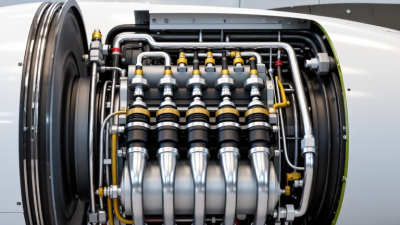
In many piston aircraft engines, fuel injection meters fuel and delivers it to the intake ports or cylinders. Unlike a carburetor, it does not rely on a venturi to draw fuel into the airflow. A metering unit responds to airflow and throttle position, while a distribution manifold routes fuel through small lines. The goal is a controlled mixture as power settings change. Small passages matter.
During a cold start, pilots may follow a prescribed priming procedure to supply fuel before airflow stabilizes. Consistent delivery can support smooth combustion and reduce carburetor icing risk, but it does not prevent every kind of induction icing. Fuel pressure, mixture setting, and airflow all affect operation. Rough running is not a diagnosis.
Maintenance follows the engine’s approved instructions and requires qualified inspection. Technicians may check for leaks, clogged nozzles, damaged lines, or incorrect fuel pressure. They then verify findings using specified procedures. A fuel smell or uneven deposits deserves attention, not guesswork. The system can look simple from the cockpit. It isn’t. Designs differ, and small adjustments can change engine behavior.
China’s Aircraft Engine Manufacturing Landscape
China’s aircraft-engine manufacturing landscape extends beyond assembling complete engines. It includes precision-machined parts, hot-section materials, fuel-metering equipment, control systems, test facilities, and maintenance capabilities. The Civil Aviation Administration of China’s 2023 Statistical Bulletin reported more than 620 million passenger trips and a fleet of 4,270 transport aircraft. These figures indicate a substantial aviation base, but they do not measure domestic engine production or prove that every component is locally sourced.
Manufacturers operate across different technical demands. Commercial turbofans need rigorous durability testing and tightly controlled fuel delivery; smaller aircraft and support platforms may require different engine configurations. Certification, reliability data, and repair capacity matter as much as production volume. That gap matters. A growing fleet can create opportunities, yet engine development remains a long-cycle effort, and public data often reveals less about supplier depth than about aircraft numbers.
Tips: When assessing this sector, compare verified certification records, endurance-test evidence, and maintenance support—not just stated output. CAAC traffic statistics help describe demand, but they are not a substitute for audited engine-manufacturing data. A careful distinction is useful.
Major Chinese Manufacturers and Their Engine Capabilities
China Best Fuel Injection Aircraft Manufacturers?
Chinese aircraft-engine capabilities span piston, turboprop, turboshaft, and turbofan development. Fuel injection is not a manufacturer category by itself. Buyers should compare the complete engine package: power rating, altitude performance, fuel consumption, service intervals, and support for the intended airframe. Public technical details vary, so advertised capability should not replace independent test evidence.
The CAAC’s Statistical Bulletin of Civil Aviation Industry Development 2023 reported 3,173 general aviation aircraft in China at year-end. That figure describes the operating fleet, not demand for any specific engine. It does, however, show why piston-engine support and replacement parts matter alongside advanced turbine programs. Chinese manufacturers and suppliers may offer different levels of design, integration, testing, and after-sales capability. These distinctions are easy to overlook. Detailed, comparable public data can also be hard to find.
Tips: Ask for certified performance tables, fuel-consumption figures, maintenance schedules, and documented in-service hours. Check that the injection system, controls, and installation match the aircraft’s operating conditions. A strong specification sheet is useful, but field support matters too.
Fuel-Injection Technologies and Aircraft Applications
Fuel-injection systems meter fuel into an engine in measured amounts, helping maintain a suitable mixture as operating conditions change. In piston aircraft, injectors deliver fuel to individual cylinders or intake ports, depending on the engine design. This can support consistent starting and power delivery, but it does not eliminate every icing risk. Details matter.
At altitude, air density falls, so the engine’s fuel-air balance needs careful control. During a climb, a pilot may adjust mixture settings according to the aircraft flight manual and engine guidance. A rough-running engine, uneven exhaust temperatures, or unexpected fuel flow deserves attention, not guesswork. Small instruments can reveal useful clues.
Turbine aircraft use a different approach: pumps and fuel nozzles deliver and atomize fuel inside the combustion system. Nozzle condition and spray quality affect stable combustion, while filters and scheduled inspections help protect the system from contamination. Applications range from training aircraft to larger commercial platforms, each with distinct operating demands. For manufacturers, credible engineering means documenting test methods, materials, maintenance intervals, and compatibility with the intended engine. A specification sheet alone is not enough. I would still want to see how performance holds up across temperature changes and repeated service cycles.
How to Assess Manufacturers, Certification, and Support
Assessing a fuel-injected aircraft manufacturer takes more than comparing range or fuel-burn claims. Request the aircraft’s certification basis, approved configuration, and traceable records for the engine and fuel-system components. FAA Part 23 sets airworthiness standards for normal-category airplanes; verify the applicable approvals through official records. GAMA’s 2023 General Aviation Aircraft Shipment and Billing Report recorded 1,682 piston-aircraft shipments. That market figure gives context, but it does not prove any individual manufacturer’s quality.
Support deserves equal scrutiny. Ask about parts availability, service-bulletin access, technician training, and response times for operators far from service centers. The FAA’s 2022 General Aviation and Part 135 Activity Survey estimated 212,335 active U.S. general-aviation aircraft, underscoring the importance of maintenance access across a large fleet. Check who handles warranty claims and whether troubleshooting instructions match approved manuals. A prompt sales reply is not a service plan.
Tips: Request sample maintenance records and written support commitments. Ask how fuel-system faults are diagnosed in the field. Details matter. Even a careful review cannot predict every delay, so leave room to reassess after speaking with current operators.