What Are the Best China Fuel Controls for Global Buyers?
Choosing the best China fuel controls for global buyers requires more than comparing unit prices. It requires evidence. China’s automotive industry exported 5.86 million vehicles in 2024, according to the China Association of Automobile Manufacturers. That scale supports strong manufacturing capacity, but it does not guarantee equal quality across every supplier. Product drawings, calibration records, traceability, and after-sales support still matter.
The International Energy Agency’s Global Energy Review 2025 reports continued growth in global electricity demand, while its Oil 2024 report expects oil demand growth to slow sharply before 2030. This changing market increases pressure on fuel controls to deliver accurate metering, stable engine performance, and lower emissions. Fatih Birol, Executive Director of the IEA, stated, “The transition to clean energy is happening worldwide and it’s unstoppable.” His comment is not a purchasing formula. It is a warning. Buyers should assess whether a supplier can support both current combustion applications and future energy systems.
Field experience often reveals what brochures hide. A control unit may look reliable on a clean test bench, then behave differently beside a vibrating engine, in freezing ports, or under humid tropical conditions. Certifications help. They are not the whole answer. Buyers should compare response time, pressure tolerance, connector quality, software access, warranty terms, and independent test results. The best China fuel controls are therefore not simply the cheapest products. They are traceable, serviceable, application-matched systems from suppliers willing to prove performance. That standard may seem demanding. It should be.
Defining Fuel Controls and Their Role in China’s Export Market
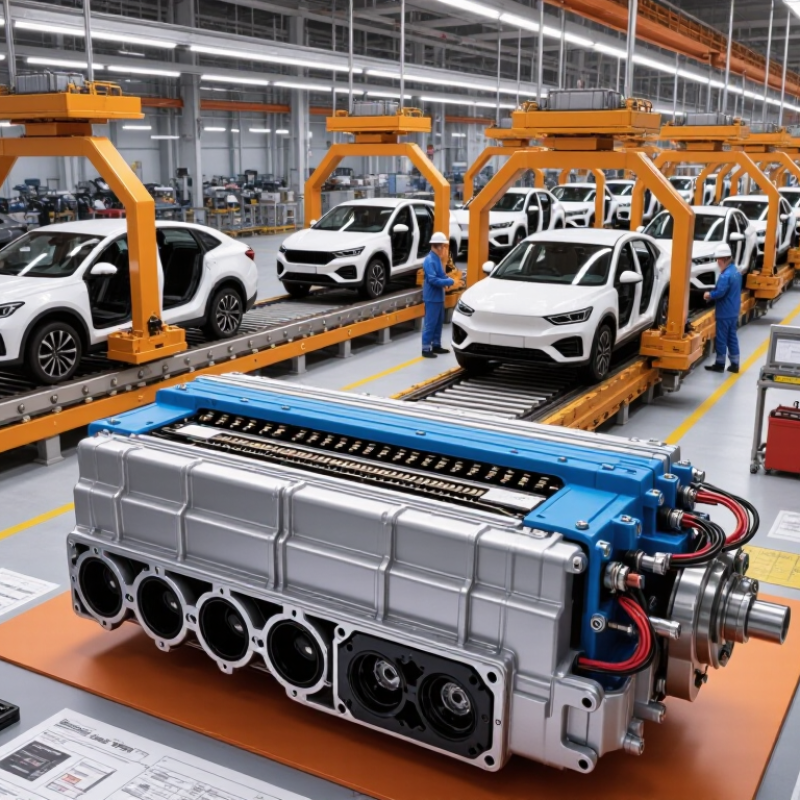
Fuel controls are devices that meter, regulate, or stop fuel flow. They include pressure regulators, shut-off valves, electronic controllers, and sensor-linked modules. Their job is precise delivery, stable pressure, and safer engine operation.
In China’s export market, buyers use them in vehicles, generators, agricultural equipment, and hybrid power systems.
31.28 million
vehicle sales from China in 2024
5.86 million
vehicle exports from China in 2024
CAAM reported 31.28 million vehicle sales and 5.86 million vehicle exports from China in 2024. That scale creates strong demand for consistent control components, not simply low-cost parts.
Quality is measured through
calibration records, leakage testing, response time, material certificates, and batch traceability.
Export buyers should also check operating temperature, fuel compatibility, connector design, and failure behavior. A low quote can hide weak testing.
The IEA’s Global EV Outlook 2025 recorded more than 17 million electric-car sales worldwide in 2024. This shift may reduce some traditional fuel-system demand, but commercial vehicles, hybrids, generators, and off-road machines still need reliable controls.
The market is changing. Supplier evaluation must change with it.
Tips: Request a sample test report before volume orders. Compare pressure accuracy under cold and hot conditions. Confirm whether the supplier follows an audited quality system, such as IATF 16949 or ISO 9001. Ask for three years of traceable production records when possible. Do not treat certification alone as proof of field reliability; independent testing remains useful.
Understanding China’s Main Fuel Control Technologies and Standards
China’s fuel-control landscape combines electronic injection, common-rail systems, oxygen sensors, and engine control units. These technologies manage fuel pressure, timing, and air-fuel ratios. China VI vehicles generally require fuels with sulfur below 10 mg/kg under national gasoline and diesel standards. This limit supports advanced catalysts and particulate-control systems.
The China Association of Automobile Manufacturers reported about 31.44 million vehicle sales in 2024. That scale makes calibration quality and traceability important for global buyers. Request test records for cold starts, injector response, pressure stability, and long-term sensor drift. Factory demonstrations can look convincing. Independent validation remains necessary. Some suppliers provide excellent hardware but limited software documentation, which creates avoidable integration work.
For marine applications, the International Maritime Organization’s IMO 2020 rules reduced the sulfur limit from 3.50% to 0.50% outside emission-control areas. Buyers should confirm fuel-metering compatibility, materials, and compliance with ISO 8217 fuel requirements. Check whether the controller supports local diagnostics and export-market communication protocols.
Tips: Match the control unit with the engine’s fuel type, operating temperature, and duty cycle. Ask for calibration files, failure-rate data, and third-party laboratory results. Treat unusually low prices carefully; lifecycle reliability may matter more than the initial quotation.
Comparing Suppliers by Quality, Compatibility, and Production Capacity
For global buyers, China fuel controls should be compared through evidence, not attractive quotations. Quality begins with stable materials, accurate machining, and repeatable assembly. Ask suppliers for pressure-cycle results, leak-test records, dimensional reports, and batch traceability. A clear inspection process matters more than polished sales language. Independent pre-shipment checks can expose problems before containers leave the factory.
Compatibility requires careful engineering review. Confirm fuel type, flow range, pressure rating, thread standards, connector design, voltage, and operating temperature. Request samples that match the final application, not a similar model. Test seals after temperature changes and extended operation. Small differences matter. A control may fit mechanically but fail under vibration, heat, or contaminated fuel. I have seen specifications look complete while installation drawings revealed missing interface details.
Production capacity is not only a monthly quantity. Evaluate tooling ownership, critical-component availability, process automation, workforce stability, and quality-control staffing. Ask for realistic lead times during peak seasons, plus evidence from recent production records. A factory may promise high output but struggle with custom variants. That risk deserves attention. Buyers should compare total supply reliability, including communication, corrective-action speed, packaging, and technical documentation. The cheapest supplier can become expensive after redesigns, delays, or field returns. Even a disciplined evaluation can miss an unusual operating condition, so pilot orders and monitored feedback remain valuable.
Assessing Certification, Compliance, and Global Shipping Requirements
For global buyers, China-made fuel controls should be judged by certification, traceability, and operating evidence. A CE mark alone may not satisfy every destination market. Buyers should request ISO 9001 records, material certificates, calibration reports, and test results matching the exact model. For hazardous-area installations, IECEx or ATEX documentation may be necessary. Classification rules also differ between marine, power-generation, and industrial applications. The International Maritime Organization’s 2023 strategy targets net-zero greenhouse-gas emissions from shipping by around 2050. This increases demand for accurate metering, shutoff, and monitoring systems.
Shipping compliance deserves equal attention. UNCTAD reports that more than 80% of global merchandise trade by volume moves by sea. A missing customs code or weak export package can delay a container for days. Buyers should confirm HS classification, country-of-origin marking, Incoterms, export documents, and destination import rules before production. If a control unit contains a battery, separate transport requirements may apply. For marine projects, verify SOLAS-related documentation and any approval required by the vessel’s classification society.
Tips: Ask for serial-number traceability. Compare certificates with test dates. Require a pre-shipment inspection. Check enclosure ratings against the installation site. Do not accept translated documents without technical review. A practical weakness remains: many buyers verify paperwork late, when redesign becomes expensive. Certification may be valid, yet unsuitable for the final country or fuel environment. Independent testing is slower, but it can expose calibration drift, seal failure, or temperature limits before shipment.
Global Diesel Fuel Compliance Benchmarks for Fuel-Control Buyers
Maximum sulfur content commonly specified for on-road diesel in selected major markets. Lower sulfur limits can affect fuel-control material selection, calibration, documentation, and destination-market compliance checks.
Reference basis: EU EN 590 and China VI diesel specifications generally limit sulfur to 10 mg/kg (ppm); U.S. ultra-low-sulfur diesel is limited to 15 ppm; India BS VI diesel is limited to 10 ppm. Buyers should confirm the latest destination-country regulations, certification documents, labeling, and dangerous-goods shipping requirements before purchase.
Selecting and Verifying the Best Fuel Control Supplier for Your Market
For global buyers, the best China fuel control is not simply the lowest-priced unit. It is a component matched to engine type, fuel pressure, climate, and service conditions. A capable supplier should provide precise drawings, material data, tolerance ranges, and clear revision records. Ask how each control is calibrated. Ask where critical parts are made. Small gaps matter.
Verification should begin with a controlled sample, not a large purchase order. Compare flow response, sealing performance, connector fit, and pressure stability against your approved specification. Request batch test reports, calibration records, and serial-level traceability. Independent laboratory checks can confirm results when the application is safety-sensitive. Inspect the production line if possible. A video call is useful, but it cannot replace an audit. That distinction is easy to forget.
Supplier reliability also depends on engineering communication. Test whether the team answers technical questions with data, not polished promises. Review failure handling, corrective-action reports, warranty terms, packaging, and spare-part availability. Confirm export documents and applicable market certifications before shipment. A supplier may pass one sample and still struggle with production consistency. Plan a pilot batch with incoming inspection and field feedback. No checklist is perfect. Revisit it after real service data arrives.